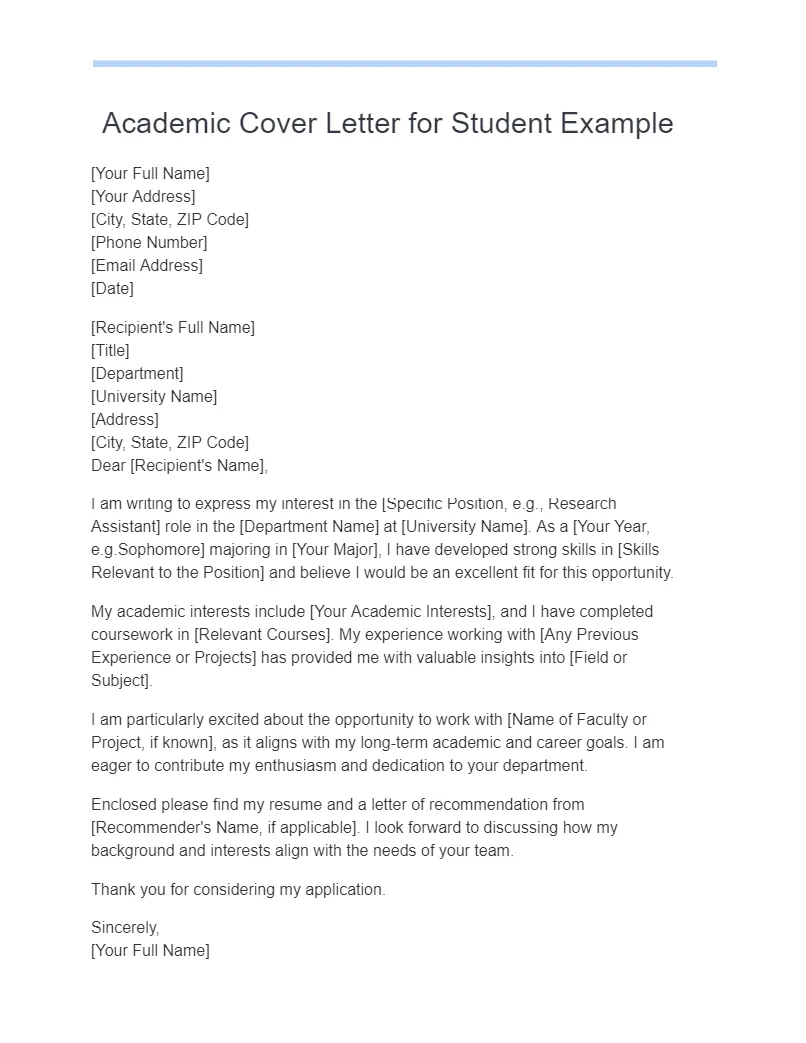
Crafting the Perfect Academic Cover Letter
In the competitive world of academia, a well-crafted cover letter is your first opportunity to make a lasting impression. It’s more than just a formality; it’s a crucial marketing tool that showcases your qualifications, passion, and suitability for a specific position. This guide provides insights and examples to help you create a compelling academic cover letter that will impress hiring committees and increase your chances of landing your dream job. The following sections will provide you with the necessary knowledge to create a powerful academic cover letter that will give you an edge in the competitive academic job market.
Understanding the Purpose of an Academic Cover Letter
The primary purpose of an academic cover letter is to introduce yourself, highlight your relevant skills and experience, and explain why you’re the perfect fit for the role and the institution. Unlike a resume or CV, which offer a factual account of your credentials, the cover letter allows you to tell a story. It’s your chance to demonstrate your personality, research interests, teaching philosophy, and how you can contribute to the department’s goals. A well-written cover letter conveys your genuine interest in the position and institution, showing that you have carefully considered the requirements and are enthusiastic about the opportunity. Therefore, it helps you stand out from the other candidates by showcasing your unique qualifications and passion for the field.
Key Components of an Effective Academic Cover Letter

An effective academic cover letter typically consists of several key components, each playing a vital role in conveying your qualifications and suitability. These elements work together to present a cohesive and persuasive case for your candidacy. Each section should be crafted to provide value and should align with the job description and the institution’s values. Ensure that the structure is logical and easy to follow for the hiring committee. It allows you to communicate clearly and concisely while highlighting the most relevant information for the position.
Contact Information
At the top of your cover letter, include your contact information: your name, address, phone number, and professional email address. Ensure your email address is professional and reflects your academic identity. This allows the hiring committee to easily reach you and should be consistent with the information on your CV. This section is not only necessary for contact purposes, but it also adds credibility and professionalism to your application.
Addressing the Hiring Committee
Whenever possible, address the cover letter to a specific person, such as the search committee chair or the hiring manager. Research the department’s website or contact the institution to find this information. If you cannot identify a specific person, use a professional greeting such as “Dear Search Committee” or “Dear Hiring Committee”. It’s essential to avoid generic greetings such as “To Whom It May Concern,” as they suggest a lack of effort and personal connection. A personalized greeting demonstrates your attention to detail and genuine interest in the position.
Highlighting Your Research Experience

Detail your research experience, emphasizing relevant projects, methodologies, and findings. Clearly state your research interests and how they align with the department’s needs. Mention any grants, awards, or publications that demonstrate your scholarly achievements. Be specific about your role in research projects and the outcomes you contributed. Use keywords from the job description to show that your research aligns with the position requirements. Highlight your ability to conduct independent research and collaborate with others. The hiring committee is interested in your contributions to your field, so make sure to include the significance of your research.
Showcasing Your Teaching Abilities
If the position involves teaching, showcase your teaching experience and philosophy. Describe courses you’ve taught, your teaching methods, and your ability to engage students. Include any teaching awards or positive student feedback. Articulate your teaching philosophy, highlighting your approach to student learning, classroom management, and curriculum development. Demonstrate your commitment to fostering an inclusive and supportive learning environment. Emphasize your ability to connect with students and adapt your teaching style to different learning needs. If you have less teaching experience, mention any mentoring or training you’ve received to help improve your abilities.
Emphasizing Your Publications and Presentations
List your publications and presentations, highlighting those most relevant to the position. Include details such as the journal or conference name, the date, and your role. Organize your publications in a clear, easy-to-read format. If you have several publications, consider grouping them by type (e.g., peer-reviewed articles, book chapters). Emphasize the impact of your publications and presentations, such as the citations received or the recognition you’ve gained. This demonstrates the quality of your work and its significance within your field. These publications can be an important element in demonstrating your contributions to the field.
Tailoring Your Letter to the Specific Position

Customize your cover letter for each position you apply for. Carefully read the job description and identify the key requirements and qualifications. Highlight how your skills and experience align with these requirements. Use the language of the job description and incorporate relevant keywords. This shows that you have taken the time to understand the position and are a good fit for the role. Avoid using a generic cover letter; instead, demonstrate that you’re genuinely interested in the specific opportunity and institution.
Demonstrating Your Fit for the Institution
Research the institution and department. Explain why you are interested in working at that specific university or college. Mention specific faculty members whose work aligns with your interests and how you can contribute to the department’s goals. This will demonstrate your understanding of the institution’s values and your ability to contribute to their mission. Highlight any connections you have to the institution or region. This is essential to show that you are enthusiastic about working with them. Show how your research, teaching, and service align with the department’s needs and strategic plan.
Proper Formatting and Tone
Use a professional and formal tone throughout your cover letter. Maintain a clear, concise, and engaging writing style. Use a standard font, such as Times New Roman or Arial, and ensure your letter is easy to read. Use appropriate spacing and margins. The length should typically be one page. Avoid jargon and overly technical language unless it is necessary for the specific position. Your writing should be clear and grammatically correct. It demonstrates your professionalism and attention to detail and reflects your ability to communicate effectively, which is crucial in academia.
Proofreading and Editing Your Cover Letter

Carefully proofread and edit your cover letter for any errors in grammar, spelling, and punctuation. Ask a colleague, mentor, or career advisor to review your letter for feedback. Ensure your letter is free of typos and errors. Errors can undermine your credibility. Proofreading and editing are essential steps in the process. They ensure that your cover letter is polished and professional, reflecting your attention to detail and commitment to excellence. A well-proofread letter demonstrates that you care about presenting yourself in the best possible light.
Academic Cover Letter Samples Examples
Academic cover letter samples can serve as excellent models for crafting your own letter. Examining different samples, tailored to specific academic positions, can provide insights into how to structure your letter and highlight relevant skills and experiences. Remember to adapt the samples to fit your unique background and the requirements of each position. Below are three examples of academic cover letter samples.
Sample 1: Research-Focused Application
This sample is designed for a research-focused position. It should highlight your research experience, publications, grants, and how your research interests align with the department’s goals. Emphasize your research achievements and your ability to conduct independent research. Highlight your ability to secure funding or collaborate effectively with other researchers. Always remember to tailor this to the specific requirements of the job description.
Sample 2: Teaching-Focused Application

This sample is tailored for positions that focus on teaching. It should highlight your teaching experience, teaching philosophy, and student evaluations. Describe the courses you have taught, your teaching methods, and your ability to engage students. Include any teaching awards or positive student feedback. Articulate your teaching philosophy, and how you foster an inclusive learning environment. Make sure to demonstrate your commitment to student success and your ability to contribute to the university’s teaching mission.
Sample 3: Combination of Research and Teaching
This sample is designed for positions that require both research and teaching responsibilities. It should balance your research accomplishments with your teaching experience. Demonstrate how your research and teaching complement each other. Highlight your ability to integrate research into your teaching and mentor students in research. This balance demonstrates your versatility and your ability to contribute to multiple aspects of the department. It is vital to emphasize the synergy between your research and teaching abilities.
Common Mistakes to Avoid
Avoid common mistakes to increase your chances of success. These errors can significantly undermine your application and detract from your qualifications. Careful attention to detail can prevent these mistakes. Pay close attention to the instructions in the job description and make sure your letter addresses all relevant points. Be sure to check the letter for any spelling or grammatical errors.
Ignoring Specific Instructions

Always follow the instructions provided in the job posting. If the posting specifies a particular format, length, or content requirements, be sure to adhere to these guidelines. Failure to follow instructions indicates a lack of attention to detail and can lead to your application being immediately discarded. If you have any questions about the instructions, be sure to ask before submitting your application.
Using Generic Language
Avoid using generic phrases that could apply to any position. Tailor your letter to the specific job and institution. Demonstrate your understanding of the department’s needs and your enthusiasm for the opportunity. Use specific examples of your accomplishments and how they align with the job requirements. This helps you stand out from other candidates. A generic letter shows a lack of effort and doesn’t highlight the value you can bring to the position.
Focusing Solely on Your Accomplishments
While it is essential to highlight your accomplishments, also explain how your skills and experience align with the needs of the department. Focus on what you can do for the institution, not just what you have done. Discuss how your skills and goals align with the institution’s mission and strategic plan. Make sure you present your qualifications in a way that also shows how you can contribute to the university or college.
Neglecting Proofreading

Errors in grammar, spelling, and punctuation can undermine your credibility. Always proofread your cover letter carefully and ask someone else to review it as well. Typos and grammatical errors can be easily avoided. Make sure you check your letter for accuracy. A well-proofread letter demonstrates that you are detail-oriented, which is crucial in academia.
Final Thoughts
Crafting a compelling academic cover letter is a crucial step in the job application process. By understanding the purpose of the letter, incorporating the key components, and avoiding common mistakes, you can create a document that showcases your qualifications and makes a strong impression on the hiring committee. Remember to tailor your letter to each position, highlight your relevant experience, and demonstrate your enthusiasm for the opportunity. With careful planning and attention to detail, your cover letter can significantly increase your chances of landing your dream academic job. Good luck with your application.